Showing posts with label Staff. Show all posts

Thursday, 19 May 2016

School of Built Environment Staff run the Oxford Town and Gown 10K


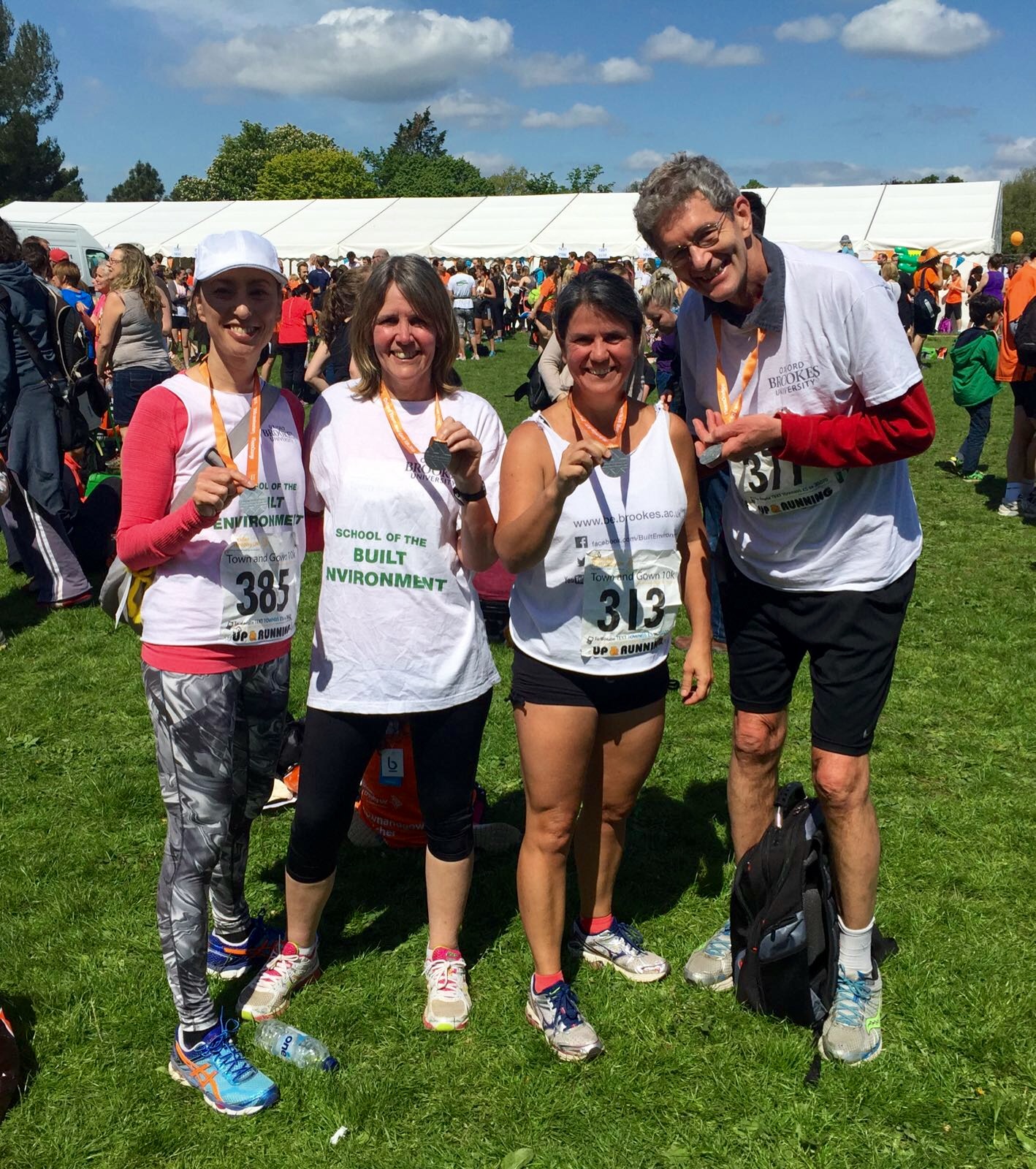
After months of diligent training, six staff from the School of the Built Environment ran the annual Town and Gown 10k race on a sunny Sunday in May.

The intrepid School team were:

Sue Brownill, Gina Dalton, Andressa Minogue, Geoff Morgan, Laura Novo de Azevedo and Pete Smith

The race course goes through the centre of historic Oxford and the streets had been cleared of vehicles in preparation. This provided some amazing views of what a streetscape looks like without cars.

Little seen streetscape - Broad Street without the cars
The Team met up before the race to discuss strategy, water stops and snack tips. Following vigorous warm up exercises, the team walked down to the start and awaited the gun,

5/6th of the team before the race: L to R Pete, Geoff, Gina, Sue and Laura

Andressa - with her medal

There were some interesting fancy dress runners, including this scary clown, who actually won the race many years ago with sub 33 minute time. That didn't happen this year. Several fancy dress carrots, a Wonder Woman and a 'burlesque' dancer were also in the race.

Scary clown walking down to the race start.
All of the SoBE team made it round the 10K course in very decent times and received their medals and goody bags after crossing the line.

After the race - some of the team with medals.

Thanks to Faculty Technology, Design and Environment Marketing team for supplying the SoBE T shirts!

Wednesday, 9 March 2016

Social Media and the School of the Built Environment

Social media: interactions among people 
in which they create, share and exchange information and ideas 
in virtual communities and networks.

Back in the old Darcy Building at the start of 2012, Gina Dalton asked me a question. 'Shall we start a blog to tell the story of the Department (of Real Estate and Construction)?' To which I replied 'Yeah, OK then.'

Four years have passed since our social media experiment began and quite a lot has changed. We've learnt a lot, created a lot and told our story. We have a new home, an amazing new flagship building and we have joined with Planning and Urban Design to form the School of the Built Environment (SBE). As well as the blogs (of which there are now three), we've developed our presence on Facebook, LinkedIn, Pinterest and Twitter and we've used Google sites and blog newsletters to provide our applicants with additional information. What started as an experiment to help convert applicants into students has become so much more.

Our audience at the Spark session. A good turnout from across SBE and beyond.


This blog post forms the basis of a presentation about social media (part of the SBE SPARK series). There are two parts: the first is about what we have learnt (and are still learning) and the second gives examples of experiments and outputs from across the School.

So, to what we have learnt...
  • Experiment. 
  • Have a plan and update it frequently.
  • One size does not fit all. What works for one group (or audience) may not work for others. 
  • Be professional, but also remember to inject some personality and style your output to suit your audience and the platform you are using. 
  • Check spelling, readability and punctuation. 
  • Use social media statistics (basic statistics are built into most platforms) to see how your audience reacts and then use this to refine your outputs.
  • Engage with colleagues and students - they may not want to be directly involved, but this is where the 'raw materials' will come from. And most are happy to provide them. 
  • Keep going. Social media does not work if you stop for too long. It takes a certain level of commitment.
  • Do not nag or annoy your audience (again statistics are useful here as is actually talking to some of your audiences - maybe in a student focus group).
  • Think about the way in which the thing that you want to promote/create will work best on social media. Is what you have promotable? How are you going to do it?
  • Go for a surf and see what others are doing. You may find some interesting stuff.
  • Think of added extras - photos, profiles, staff interviews. Useful when promoting a course. 
  • Tell stories. Words or pictures.
  • Use a good photo-editing tool. Even photos snapped with a phone can look great. 
  • Make your visuals look good and use enough of them. It helps.
  • If you're creating original content - make the most of it and think about how to use it. Share on different platforms and even in paper form.
  • Share other people's content to enhance your own (but always acknowledge your source - this is usually done automatically if you share articles/links). 

Examples of the use of social media by the School of the Built Environment (links in red):

For applicants - Andressa Minogue uses a (closed) Facebook Group to create an online community for the MSc Real Estate applicants ahead of their arrival. She also pioneered the use of Google sites to create an additional source of information for applicants/enquirers - this has now become the applicant portal.

In teaching - Laura Novo de Azevedo has been using Pinterest (the online pin board) and Facebook (closed) Groups for students working together on live projects in Urban Planning.

For research promotion - Dana Vilistere tweets at Brookes_Impact about research taking place across Oxford Brookes. Cycleboom and Global Science Spaces are research projects which SBE staff (Tim Jones and Dave Valler) are involved with and are excellent examples of social media presence.

For our alumni - a number of (subject-based) alumni groups have been developed within SBE. These have proved useful for graduates (and current students) to keep in touch with us, each other and the job market. They have been a useful source - for the development of the Real Estate Mentoring Scheme, graduate profiles and ideas for course development.

For the promotion of SBE and its activities - we have developed 3 blogs for the three subject areas in SBE: planning and urban design, real estate, construction. SBE has a Facebook page and Twitter profile. The subject areas are also represented on Facebook - Real Estate and Construction subject page and Brookes Planners and Urban Design Facebook groups (these are all well established). Real Estate and Construction also has a presence on Pinterest (an experiment). The content that is developed for the blogs is also used as the basis for printed material (applicant newsletters/posters) and we have produced a Facebook book. As well as online promotion, the blogs and Facebook page are promoted via our business card.


Finally, thanks to the many people and especially the TDE Marketing team at Oxford Brookes, who have contributed to and supported our venture.


Thursday, 2 July 2015

Real Estate Investment Finance: Q&A with the REIF Subject Leader

The Department of Real Estate and Construction (REC) recently launched a new online programme in Real Estate Investment Finance. The programme is available at MSc or Postgraduate Diploma level and also at Certificate level.

This is the second blog post in the series about the staff who are involved with REIF (the first, about the Module Leader for the REIF module is here). This time I have been talking to the Subject Leader for the REIF programmes - Dr Ye Xu who, together with Peter Dent, was recently awarded the Brookes People Team Award for Enterprising Creativity. They were nominated for their successful development and delivery of two major international professional training programmes in China and South East Asia (including REIF).


Ye Xu (left) - photo courtesy of OBU website

I asked Ye a few questions:

What did you study at university?
I started studying Real Estate at university in China. Real Estate had just started as a discipline in Chinese universities and I wanted to study something that was a bit different from the usual business and finance. Shortly afterwards, I had the opportunity to study for a degree in the UK, something which I very much wanted to do. I arrived at the University of Central Lancashire more than 18 years ago and was persuaded to study a degree in Building Surveying after a chat with one of the tutors. I enjoyed studying the more technical side of surveying and I very much enjoyed living in Preston. But my first love was Real Estate, so I applied for MSc courses in Real Estate and ended up at the University of Reading (of course, I would have come to Oxford Brookes at that stage, but that was before they started the MSc Real Estate!). After handing in my MSc dissertation on a Friday, I started as a graduate surveyor with Cushman & Wakefield the following Monday.

How did you find your way into Real Estate at Oxford Brookes?
I worked for Cushman & Wakefield (initially in London) for 2/3 years and passed my APC along the way, becoming a member of the RICS. I also spent some time working at the Cushman & Wakefield office in China where I made a lot of useful contacts. Then I decided it was time to take my studies further and I applied to Oxford Brookes to study for a PhD and in the area of real estate investment finance. After I completed my PhD, I was offered a job with the Department of REC and stayed!

Why did you decide to start the REIF programmes?
During my time with Cushman & Wakefield in China, I made lots of contacts and these carried over into my work at Oxford Brookes. Working at a university in the UK and producing graduates ready to take the APC and meet the professional standards of the RICS (Royal Institution of Charterd Surveyors), I decided to explore the possibilities for starting a training programme in China. We worked closely with the RICS to develop a professional training programme (Oxford Adapt) to prepare professionals for the RICS APC exams and raise the profile of the profession and professional standards in China. The Oxford Adapt training programme has been very successful and is now expanding to other countries in Asia.

It was during this time that contact with APREA (Asia Pacific Real Estate Association) began - they were looking for a UK university to work with to develop and deliver their training programme: the Certificate of Real Estate Investment Finance (CREIF). Oxford Brookes started delivering CREIF in March 2014 and following requests from students for a internationally recognised qualification, the Postgraduate Diplom and MSc REIF came on line in 2015. The MSc REIF is now accredited by the RICS.

Noel Neo, CFA, Head of Research at APREA and CREIF graduate put it this way:

‘Most real estate investment professionals have an academic background in either real estate or finance. The REIF programmes bridge this gap by combining elements of finance and real estate - providing those with a real estate background with a foundation in finance and those with a finance background with a foundation in real estate. It is a great finishing course for anyone with a background in either finance or real estate and wishing to develop the other half of the skillset'.

How does the overall REIF programme fit together and what kind of teaching methods are being used?
The REIF programme intends to show students the insight of property as an investment instrument in a mixed asset portfolio. In the meantime, it also helps show investors how to manage their property to sustain their cashflows. Each of the 4 core modules has been designed around six learning packages and are assessed through a combination of online tests, workbooks, problem-solving, analysis and report writing, allowing students to work at your own pace and keep track of what they have learned. We are using a Virtual Learning Platform (Moodle) to deliver the programmes online and, on that platform we are creating a community for lecturers and students to share knowledge and experience. In terms of the contents of the REIF programmes, we developed it together with practitioners in the industry. Therefore, we are trying to include as many latest topics as possible in modules. Students will not only be able to learn the theory, but more importantly, they will know how to apply those theories in practice.

For more detailed information about the modules and the programmes, take a look at REIF on the website and also REIF on the Hot Property blog.


Tuesday, 28 April 2015

Real Estate and Construction Ball 2015


One week before the REC Ball and the venue (the Randolph Hotel) goes up in flames. Apparently caused by a beef stroganoff being flambéed with a bit too much cognac. The hunt was on for an alternative venue and following an epic re-organisation, the REC Ball took place on 24 April as planned, at the Kassam Stadium.

Over 200 tickets were sold and a charity raffle was organised in aid of the Mark Evison Foundation. Mark was a 2006 real estate graduate who died in 2009 from wounds he received in Helmand.

OBRESS (Oxford Brookes Real Estate Student Society) and OBUCS (Oxford Brookes University Construction Society) also secured sponsorship from CBRE, Savills, Montagu Evans, Carter Jonas, Cushman and Wakefield, Deloitte, Jackson Rowe, Martin and Co., Longcross, Estates Gazette and Symm.

These photos (taken by Gina Dalton) will give you a flavour of the night's events (at the Kassam) - we have no photos of the after-party (maybe a good thing)...

This is what it looked like before...


The Selfie Machine (we'll let you know when we find out where all these photos went)

The meal.

The food.


Nick French with (some of the) MSc Real Estate students

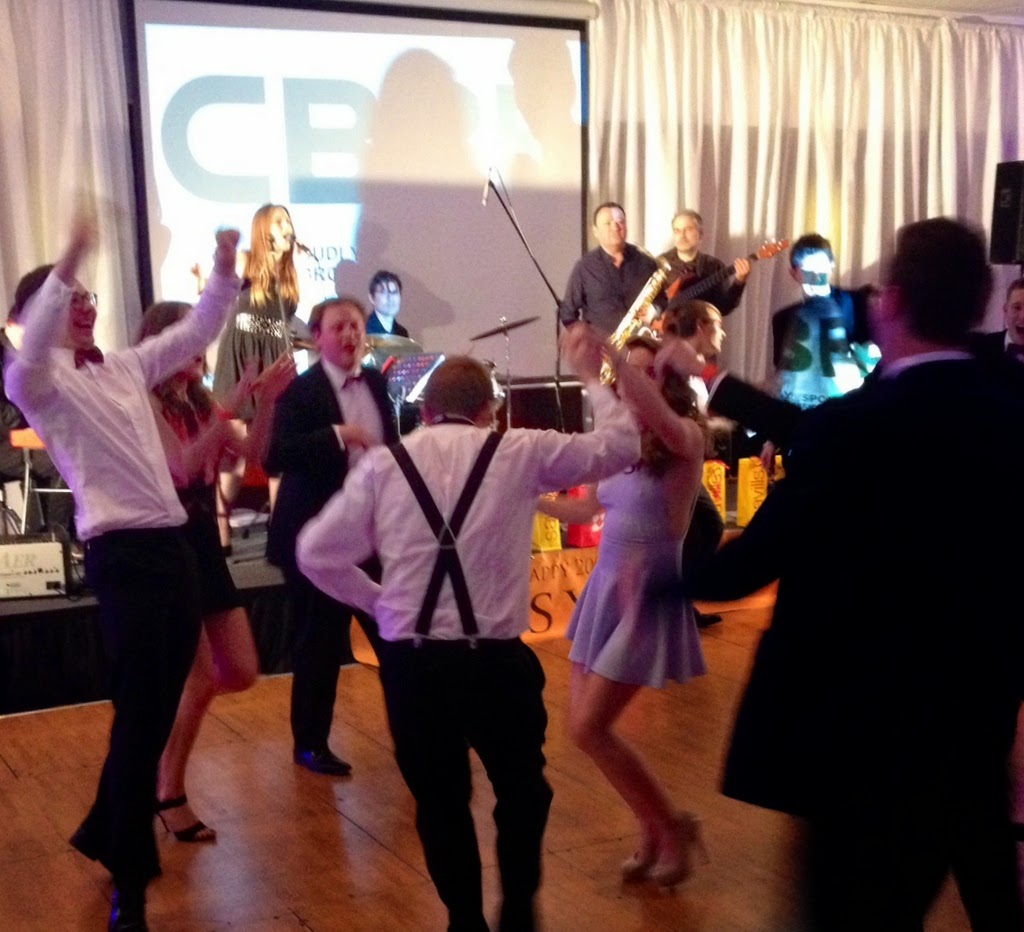
The band.

The dance floor.

Kilts are always good on the dance floor (with Rebecca Gee)

The raffle (with Rebecca Gee and James Bircumshaw).

The end (with Gina Dalton and Rebecca Gee).
Not bad for a football stadium.


Wednesday, 25 February 2015

MSc Real Estate: afternoon tea at Nick's house

Nick French is the programme leader for the MSc Real Estate, a subject he is passionate about. Anyone who has paid a visit to his office at Oxford Brookes will know about his other passion: collecting things.

Every year, he invites the MSc Real Estate students round for afternoon tea. This year he also let a camera in. Thanks to Nina Xia for the photos and to Nick for allowing me to show you round...

...through the red door

Tea and games.

Exploring.


The cat (one of them).

And more tea.


For more information about the MSc Real Estate take a look at the REC website.


Sunday, 20 July 2014

Affordable and Social Housing in China

To set the context, let's start with a quote from Tony Ho, Deputy Director of RICS North Asia and Chair of the RICS Future Cities Summit 2014:

'By 2020, urban population will account for 60% of China’s total population and more than 200 million people are expected to move to cities or towns. The surge in population will bring unprecedented challenges to urban construction. Although China’s urbanisation is progressing rapidly, it is a relatively complex process. To build a ‘livable’ city that is socially pluralistic and culturally vibrant and to promote urbanisation as the next engine of economic growth, China must work towards improving the quality of urban construction, constantly optimising and improving the administrative, economic and social functions of the city to bring more tangible benefits to people’s lives.' 

Photo courtesy of the RICS

Albert Cao, Senior Lecturer in the Department of Real Estate and Construction attended the RICS Future Cities Summit that was held in Shanghai on 17/18 June 2014. The Summit explored views and aspirations on how future cities should be planned, built and managed. Presentations and panel discussions also covered the integration of mixed-use commercial properties and transportation, value-added asset management, livable cities and BIM application.


Albert in action - photo courtesy of Sina

Albert was there to launch the latest RICS research report 'More doesn't mean better: inefficiencies in China's affordable and social housing sector.' The report, completed by Albert Cao and Ramin Keivani (also from REC) in January 2014, was funded by the RICS. Based on intensive fieldwork in Guangzhou and Wuhan, two major cities in China, this research investigated the inefficiencies resulting from incomplete institutional and funding arrangements in China’s massive affordable and social housing program. The results show that while local innovations and central government policies are creating conditions to improve efficiency, further institutional and funding reforms are required to address affordable and social housing requirements in the country in the long run. Recommendations include:

  • Further development of the institutional framework to clearly define the rights and obligations of local governments, management staff and tenants
  • Reforming the funding formula to provide certainty to local governments of support from the central government commitment and other sources
  • Introducing third party provision in China’s affordable and social housing sector to offer choices to tenants.

Albert was able to share the key findings and suggestions at the Summit which was attended by over 200 delegates: the research findings are of relevance to practitioners, policy makers and academics interested in addressing the difficulties faced by China’s ASH sector. You can take a look at the full report on the RICS website.

The presentation and report were also well received by China’s media and professional bodies and Albert was invited for interview by 6 media groups - the interviews can be found here:


The RICS Hong Kong Branch invited Albert to make a presentation on the research as part of their CPD section - two of the 60 attendants were former graduates of the Department of Real Estate and Construction at Oxford Brookes. An interview on the report will also appear in a future edition of the RICS Modus magazine and an academic paper based on the report will be written later this year.

For more information contact: Dr Albert Cao at the Department of Real Estate and Construction, Oxford Brookes University.


Monday, 2 June 2014

You shall go to the (foot)ball...

Each year in November, the Oxford Brookes Real Estate Management Society (OBREMS) organises their Annual Dinner for alumni and staff. 

As well as the food, liquid refreshments, networking and after-dinner speeches, there is usually a raffle. In 2013, Rebecca Gee (Senior Lecturer in Real Estate) was lucky enough to win one of the prizes which was donated by Strutt & Parker: two tickets to Wembley to see a football match of her choice. Rebecca chose the FA Cup Final on the 17th May between Arsenal and Hull City.


Soaking up the atmosphere before the big match - photo by Rebecca Gee

Here's what she told me about the match: 'The seats were fantastic although we were surrounded by die-hard Arsenal supporters who were very unhappy after 10 minutes as Hull had gone 2-0 up. However, they were eventually happy after extra time as Arsenal took the cup after a very frantic last 10 minutes. It was a very exciting game'. You can see the full match report on the BBC website.


And here is Rebecca together with one of the die-hard Arsenal supporters.

Many thanks to Strutt & Parker for their generous donation and support of OBREMS. You might like to know that Strutt & Parker was established in 1885, when old school friends, Edward Strutt and Charles Parker became business partners to manage large estates in the east of England, the business today provides professional support on all matters relating to land and property – whether offices or farms, country houses or business parks, leisure centres or dairy farms, new home construction or rural estate management.


Monday, 6 January 2014

Christmas in REC 2013

Ingredients for the Real Estate and Construction Christmas Party:

1. Music

2. Food

3. Drink

4. Pizza (bringing great joy...)

5. Chat

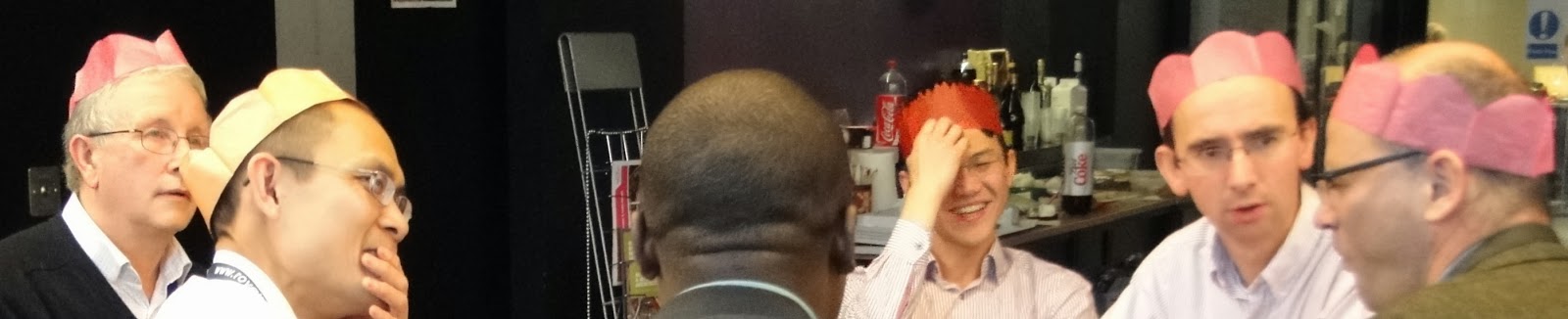
6. Crackers

7. Hats

8. Jokes
 
9. The Quiz

10. The Quiz Master

11. Secret Santa (so secret we have no photos)


And finally, a bit more music...